Resources

Financial solutions
Streamlining operations with innovative strategies
MoneyFlow is dedicated to helping businesses navigate financial complexities and achieve sustainable growth through tailored strategies.
events
Content design conferences
Here is a selection of content design events, including virtual conferences.
Adrie van der Luijt, founder of Trauma-Informed Content Consulting, is a regular keynote speaker at international content design events. For updates, visit our Events page.


Books
Recommended books on trauma-informed content design
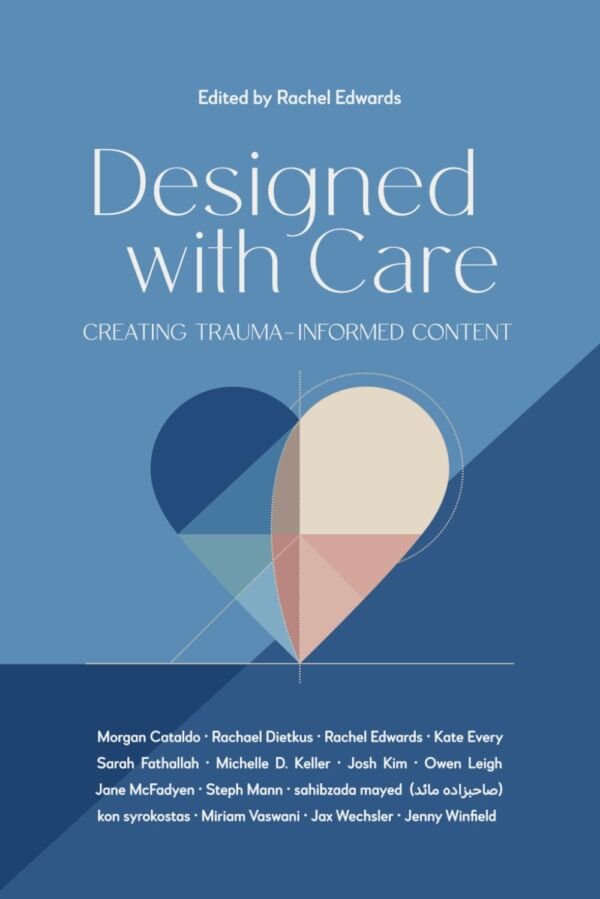
Designed with Care: Creating trauma-informed content
Edited by Rachel Edwards
The closest thing the field currently has to a definitive text. Rachel Edwards edited this collection of essays from 15 designers, researchers and educators, covering everything from trauma and technology to crisis communications, government content and working with children and young people. Required reading if you are serious about this work.
December 2024
ISBN-13: 979-8300551575
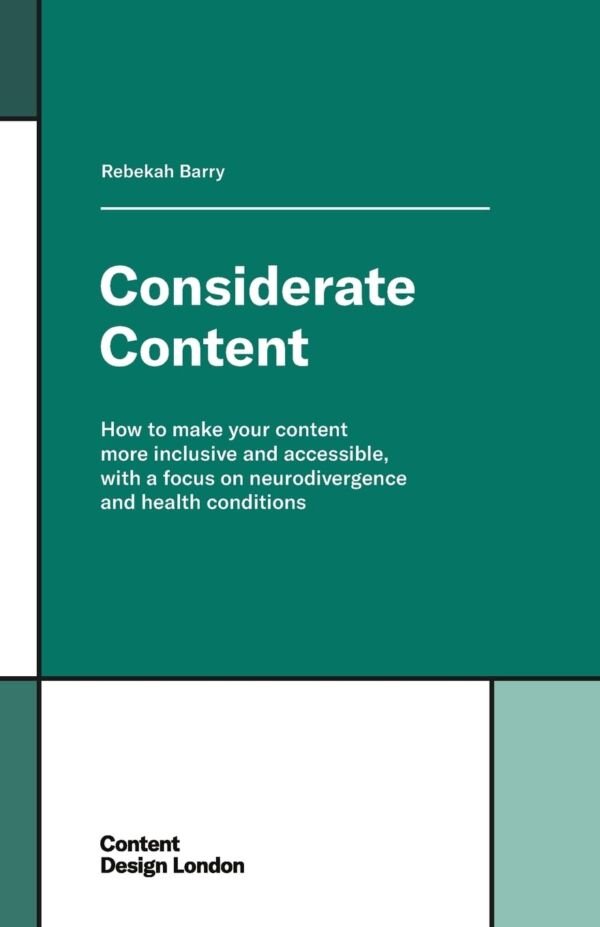
Considerate Content
Rebekah Barry
Rebekah Barry’s argument is simple and quietly radical: accessibility and inclusion are not compliance checkboxes; they are what makes content work for everyone. A useful corrective for anyone who still thinks trauma-informed practice is a niche concern.
April 2025
ISBN-10: 1326817663
ISBN-13: 978-1326817664
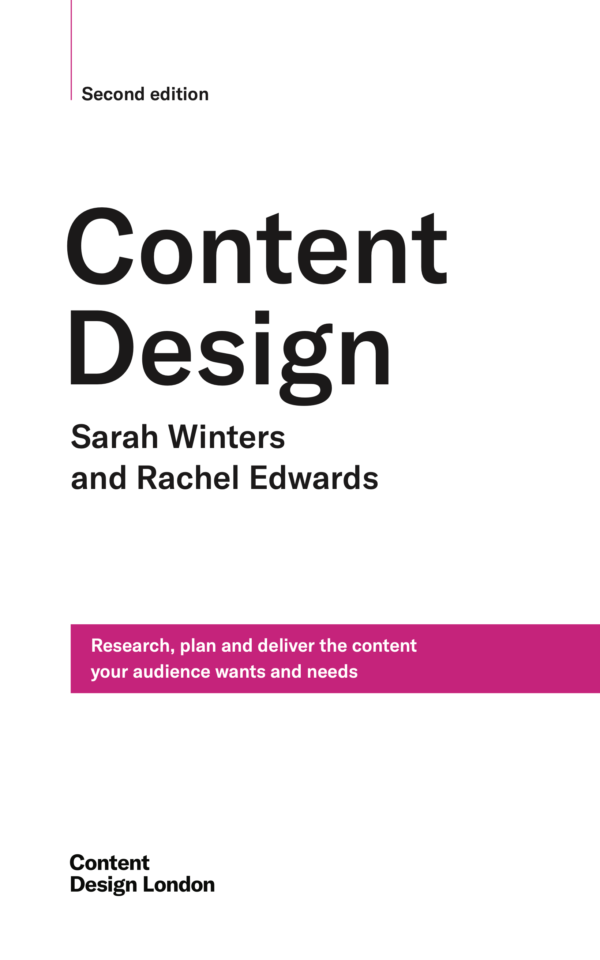
Content Design
Sarah Winters and Rachel Edwards
The foundational text for the discipline. If you are new to content design, start here. If you are not new, you probably already have it.
April 2025
ISBN-10: 1326817663
ISBN-13: 978-1326817664
Articles
A selection of articles on trauma-informed content design
Trauma-informed content design: a comprehensive guide
Megan Legawiec
This is a practitioner-level introduction to trauma-informed content design for a UX audience. It makes the case that trauma-informed design is a natural extension of the accessibility and inclusion work content designers already do, not a specialism reserved for crisis services or clinical contexts.
The article covers how PTSD and prolonged exposure to stress reshape how the brain processes information and what that means for the way users navigate digital experiences and absorb content. It draws on the SAMHSA six principles of trauma-informed care, developed in clinical settings since the 1990s, and applies them to content design practice.
Worth reading as a grounding document if the framework is new to you or as a reference point for conversations with colleagues who need the case made from first principles.
Using trauma-informed principles in content design
Rachel Edwards
This is a practical, principle-by-principle walkthrough of how trauma-informed thinking applies to content work. It draws on the UK government’s working definitions of trauma-informed practice: safety, trust, choice, collaboration, empowerment and cultural consideration. It translates each one into concrete content design decisions.
The article is clear about what content designers can and cannot do: once content is published, users are on their own. The argument is that following trauma-informed principles is how we make that solo experience less likely to cause harm.
It’s also useful for the distinctions it draws early on. Stress, anxiety and trauma are treated as related but separate. The cognitive effects of all three (harder to read, harder to decide, harder to process) are presented as the practical reason why content needs to account for them.
A good starting point for anyone who needs the framework explained clearly before getting into the implications for their own content.
A brief guide to trauma-informed content design – and why it matters
Ray Newman
This is a practitioner’s introduction to trauma-informed content design that earns its place on a reading list by being concrete where many introductory pieces stay abstract. Newman grounds the framework in real examples, including mental health appointment cancellations, location prompts on services used by people who’ve been stalked and financial correspondence that echoes the anxiety of childhood poverty. In doing so he makes the case more effectively than a principles-only walkthrough would.
The article introduces the big T / small t trauma distinction (drawing on Jax Wechsler’s essay in Designed with Care) and uses it to make an argument that matters: that among the users of any service, some people will be carrying trauma and that designing as if they aren’t is a choice with consequences.
There’s also a practical section on running trauma-informed design workshops with teams, which makes this useful for practitioners who need to bring colleagues along, not just develop their own understanding.
Inclusive by Design: Use a Trauma-Informed Approach
Melissa Eggleston and Carol F. Scott
This is one of the more academically grounded pieces in the field – and more useful for it. Scott brings over a decade of applied trauma-informed practice spanning social work, psychology and health informatics; Eggleston brings UX research and design. The combination shows.
The piece covers trauma comprehensively: its types, its prevalence, the mechanics of re-traumatisation and the ways it permanently alters how people interact with technology. It then applies SAMHSA’s six principles to design practice, with concrete examples at each stage.
Two things distinguish it from the introductory pieces in this field. First, it takes positionality seriously, asking design teams to examine their own assumptions and power dynamics before they start. Second, it frames becoming trauma-informed as a continuum rather than a destination, drawing on the Missouri Model to show what progress through that continuum actually looks like in practice.
The most directly useful section for practitioners is the one on trauma-informed research: what to do before, during and after sessions to avoid the research process itself causing harm.
Designing Forms for Tired Caregivers: Decreasing Digital Fatigue
Ollie Fielding
This is a practitioner piece grounded in real design experience, including, usefully, the experience of getting it wrong. Fielding built clinically rigorous digital intake tools for dementia care, watched caregivers rush through them in anxiety and changed course. The article is the account of what he learned.
The central heuristic is worth quoting directly as a design test: would this feel respectful at 11 p.m. on a bad day, on a phone, in a tired person’s hands? That’s a living-experience design standard stated plainly, without the theoretical scaffolding and it’s more useful for being so direct.
The practical recommendations are concrete: plain language over clinical terminology, visible explanatory copy on sensitive questions rather than buried help text, free-text fields that someone is actually responsible for reading, and no making people retell their story four times across systems. The section on the Zarit Burden Interview, a validated 22-item screening instrument, is particularly honest about the gap between clinical neutrality and emotional impact. A question that scores for self-efficacy and distress can feel like an accusation to someone answering alone on a phone at night. Fielding doesn’t treat that as a flaw in the instrument. He treats it as a design responsibility.
The article is US-focused, rooted in the specifics of the American healthcare system and Medicare compliance requirements, which limits some of its direct transferability. But the underlying argument, that intake forms communicate what an organisation thinks of the people using them, before anyone has spoken a word, is not US-specific at all.
A brief guide to trauma-informed content design – and why it matters
Ray Newman
This is a practitioner’s introduction to trauma-informed content design that earns its place on a reading list by being concrete where many introductory pieces stay abstract. Newman grounds the framework in real examples, including mental health appointment cancellations, location prompts on services used by people who’ve been stalked and financial correspondence that echoes the anxiety of childhood poverty. In doing so he makes the case more effectively than a principles-only walkthrough would.
The article introduces the big T / small t trauma distinction (drawing on Jax Wechsler’s essay in Designed with Care) and uses it to make an argument that matters: that among the users of any service, some people will be carrying trauma and that designing as if they aren’t is a choice with consequences.
There’s also a practical section on running trauma-informed design workshops with teams, which makes this useful for practitioners who need to bring colleagues along, not just develop their own understanding.
NETWORKS
Empower businesses with solutions. Creating innovative financial effortlessly to enhance business growth.
MoneyFlow is dedicated to empowering businesses with innovative financial solutions, ensuring our services are not only effective but also tailored to meet diverse client needs.
Content Club
Meet content people from around the world to share best practices, learn from each other and have conversations about the future of content design.
Content Club is free to join. All events and meet-ups are free, and speakers are paid for their time.
UX Content Collective
Founded by content designers to provide serious content-specific education. Courses are self-paced and live workshops, with feedback from working content designers rather than automated marking. This is great if you want critique that reflects how the work lands in practice.
The catalogue runs from basic UX writing through to specialist skills. Certifications are maintained and updated to reflect current tools and emerging practice. As a result, they’re less likely to date badly on a CV or LinkedIn profile. Worth a look if you’re building formal credentials in the field.